Thanks to the Fall
I have three prongs on my pitchfork of thanks

Lettre Sauvage is resurgent.
Because of Ryan Wilson’s poem, we got to know one oak leaf very well.
We’ll soon be open for poetry and illustration submissions and letterpress helpers.
It still feels like fall in Southern California. It was 80 degrees today and the night’s dry and cold. This is the time of year when I’m bursting with plans and my piles of books reach perilous heights. This year, I’m giving thanks for higher levels of energy that helped me get through more of the reading and studying than I would have expected and a lovely letterpress project. I am experiencing resurgence of creativity, and motivation.
I’ve learned that, for me, having a highly agreeable disposition means also being easily discouraged by circumstances. I’m not usually discouraged by negative people because I have a strong sense of justice, but I let mounting debts, dizzy spells, and water damage in my studio rob me of my drive and purpose. I left my letterpresses alone, collecting dust for several years. During these years, a lot of great things were happening, especially educating my daughter and taking on new roles at Mother of Divine Grace School. Spending that time immersed in classical education prepared me to engage in poetry in new ways. The slowing down turned out to be beneficial and I’m learning to maintain my strength in gratitude.
Being surrounded by great writers at UST, it’s not surprising that my publishing mind was reawakened. At the summer residency in 2024, I made up my mind to get one of my presses tuned up and ask the writers I most admire to collaborate, starting with Ryan Wilson. When I heard Mark C Watney read “In the Harvest Season” in our workshop, I realized it was the perfect broadside poem. The pathos is very strong in an initial reading and it’s multi-dimensional and deep.
In class, Ryan continually stresses that we should think of form not as a pattern, scheme, or set of devices, but a total harmony. This is exactly what fascinates me about book and broadside design in my few modest projects. Ryan also gives advice to guide his students to a greater harmony of contemplation, reading, and writing, and taking long walks- an integrated life in literature.
The first thing I did when I got Ryan’s permission to design the broadside was read the poem to my daughter, who is a talented visual artist. And then we went for a long walk.
Our neighborhood was built in an ancient oak grove and many of the trees were left standing. Other tree species have been added in the gardens along the narrow, winding lanes. We came around a corner and found ourselves in a crackling pile of leaves from an oak tree and several shrubs. The afternoon light cast a shadow over each curve and wrinkle as we scanned the swath and picked them out one by one to take in their unique details. Yma collected the finalists and ended up photographing an amazingly haggard oak leaf for the broadside.
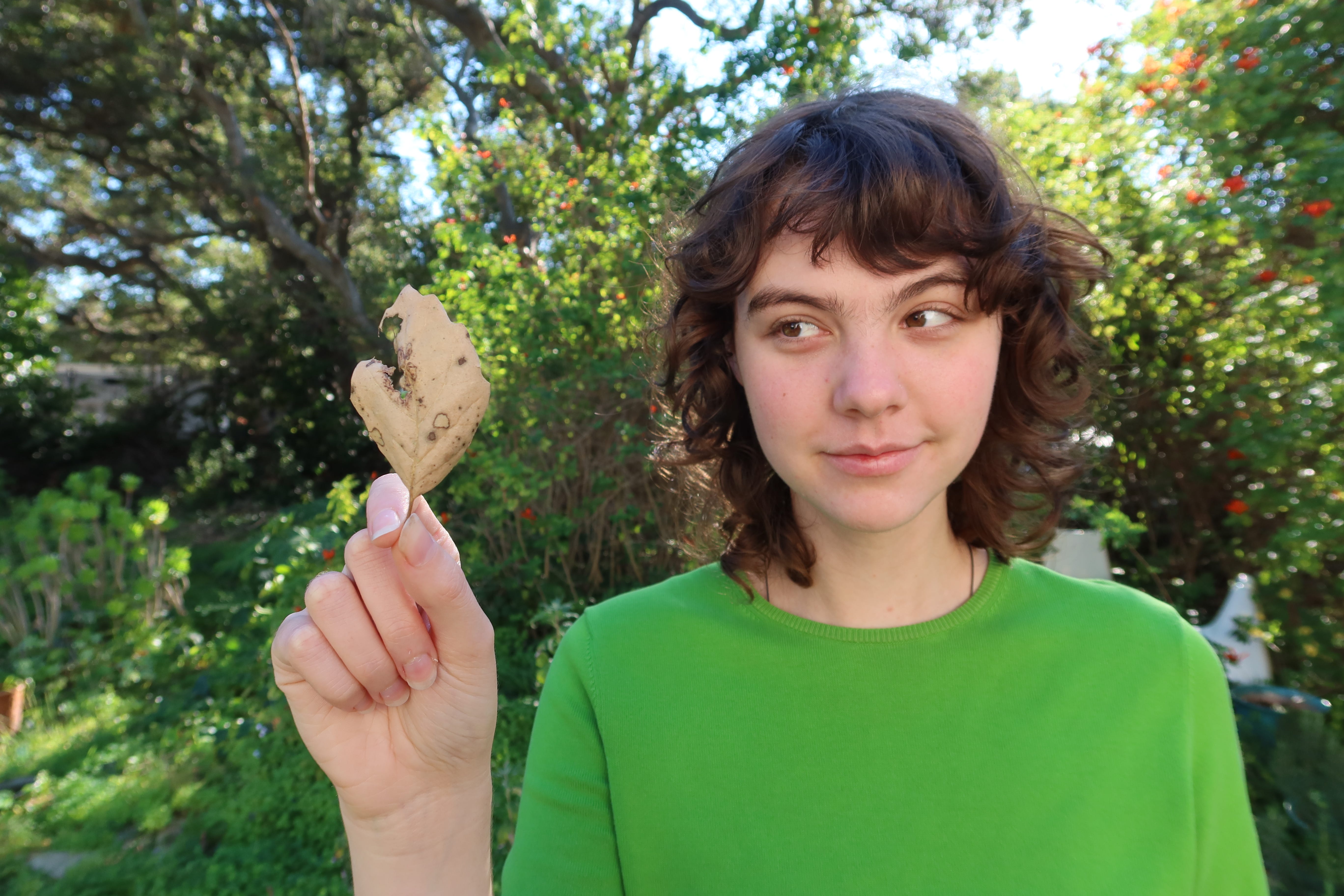
We printed 82 copies because Ryan was born in ’82. They’re on cotton paper, which is a nod to his ancestors who labored in the cotton farming industry. I hand-inked the leaves so that each one is a slightly different shade of brassiness. I was amazed at how easily I slipped into a flow state and remembered what to do. The typography was the weakness. I missed adding curved apostrophes. An utterly harmonious project, all told.


This spring, there will be two chapbook projects on the press. One is with the rising star poetics, Elijah Perseus Blumov- more details forthcoming. The other will feature a small forest of verses pondering family bonds, from Marie Burdett, Isabella Hsu, Zina Gomez-Liss, and myself, Fiona Spring. These will both be letterpress chapbooks, inside and out, sewn with needle and thread. I’ll be trying to entice friends and family members into my studio to lend muscle and moral support. I’m also planning a poetry contest and future projects that will be open for submissions.
I’m praying for many fruitful collaborations. Rabanus Maurus, ora pro nobis!
Love this!! I have so many collector’s books from the 1800s, even 1750 and there’s just nothing like holding actual paper that ages… as the words remain fresh and new. :)
This is prompting me to fertilize the seed of a poem about trees that we had to cut down this year - “good and faithful servants”
This sounds amazing!